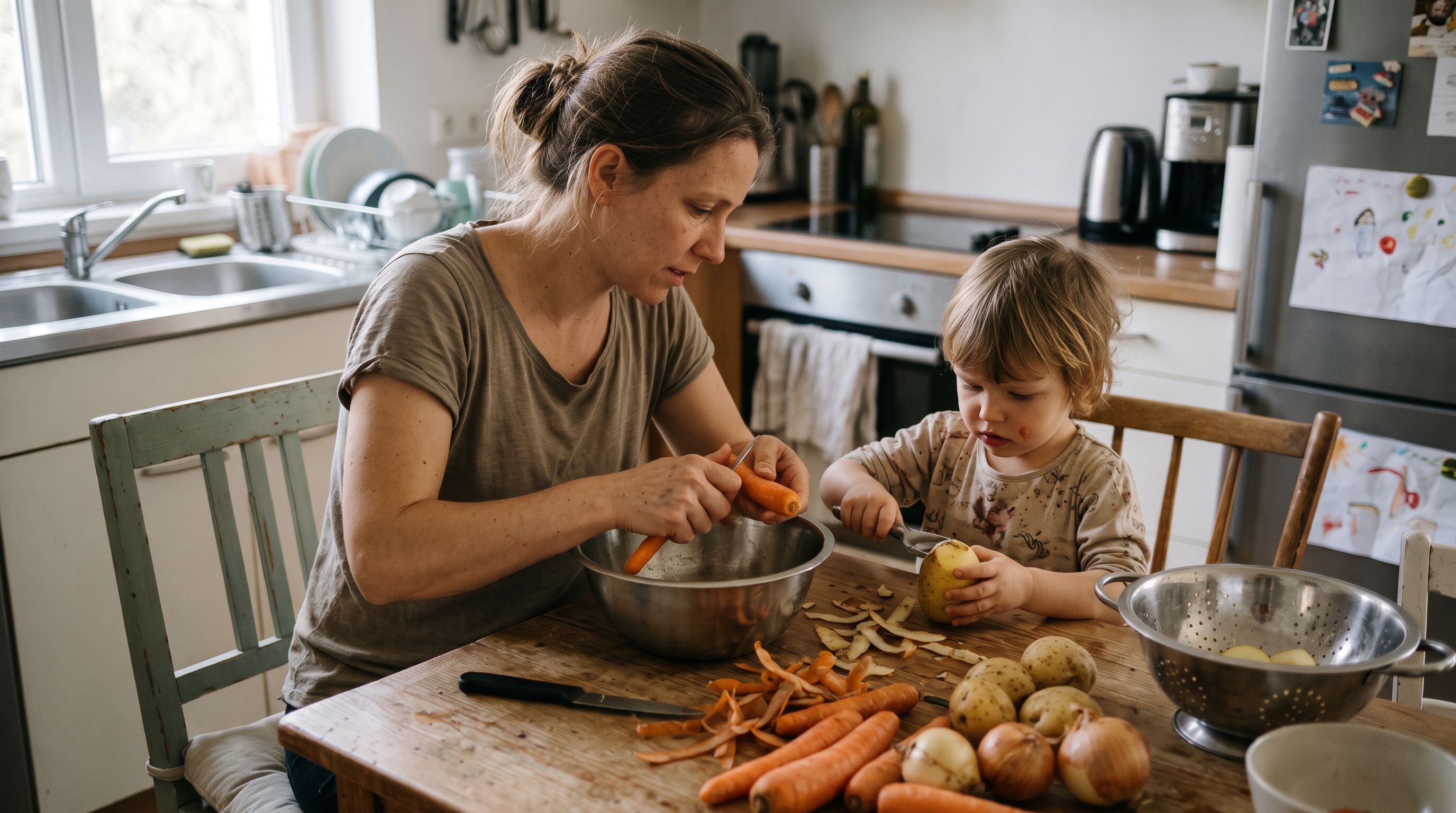
There are things a child comes to know about home long before being able to explain them. The sound of someone preparing breakfast. The place where shoes are left by the door. A familiar voice calling everyone to the table. The way an adult responds when something breaks, or when a guest arrives unexpectedly.
Children notice these things. They notice who is listened to, what is celebrated, how disagreements end, and whether promises are kept. Much of what they learn about living with other people comes from being part of a household, day after day.
I have often thought about the place of mothers in this ordinary work. A mother may spend the morning preparing meals, getting children ready, answering questions, attending to her own work, and trying to keep the household moving. Some days she does all of this with patience; on others, tiredness gets the better of her. The work can feel repetitive, and its results are seldom immediately visible.
Yet through these ordinary days, children are learning what it means to belong to a family, to care for others, and to live with responsibility. Mothers have a particular part in that formation, alongside fathers and the many people who help a family flourish.
This is what I mean by motherhood as cultural architecture. The phrase may sound grand for such familiar activities, but I want to consider the very practical ways in which the life of a home helps form the people who live there.
The First Things We Learn
A child learns to speak by listening to others. Courtesy is learned through repeated encounters: greeting a neighbor, waiting for a turn, thanking someone for a gift. A sense of fairness begins with the way siblings are treated and how adults respond when someone has been hurt.
These lessons are often taught directly, but they are also learned by observation. We can tell a child to speak kindly, and the lesson becomes more convincing when they hear us speak kindly under strain. We can encourage generosity, and the child sees what it looks like when there is room at the table for another person.
Parents do not control everything that shapes a child. Temperament, friendships, school, hardship, and the child's own choices all matter. A loving home offers a foundation, though it cannot guarantee a particular outcome.
That is important to remember, especially for mothers who already carry too much responsibility. The influence of a home is real; so are its limits. Children need the care of fathers, relatives, teachers, neighbors, and a wider community. No mother can or should be expected to provide everything alone.
What Receives Our Attention
One of the ways a home teaches is through what it gives time to. If everyone is continually interrupted during meals, conversation becomes difficult. If books are read aloud, children become familiar with the pleasure of listening to a story. If a parent stops to admire a bird in the garden or the changing light in the evening, a child may begin to notice such things too.
This does not require a quiet or perfectly arranged household. Family life is often noisy, especially with young children. Some homes have little space; some parents work shifts; some days there is barely time to prepare dinner. Attention can still be given in small ways: listening to an account of the school day, putting down a phone for a conversation, answering a question seriously.
Attention is also a gift we must keep learning to give. I know how easy it is to be physically present while thinking about the next task. A child who asks a question at an inconvenient moment reminds us that care sometimes requires an interruption we did not plan.
We will not respond well every time. Apologizing when we have been impatient can itself teach something valuable about honesty and reconciliation.

The Stories a Family Keeps
Family stories give children a sense of where they come from. They hear about grandparents they may never have met, the places their parents grew up, the difficulties relatives endured, and the occasions that brought everyone together.
Sometimes these stories are told while preparing food or looking through old photographs. Sometimes a familiar dish leads to a memory. A name, a song, or an object kept for years may open a conversation that would otherwise never have happened.
I think of the stories carried from one generation to another, including those from places and times very different from the world our children know. They can teach gratitude for sacrifices made on their behalf, and sympathy for people whose lives have been harder than their own.
Families also carry painful memories. We need judgment about what children are ready to hear and how those stories should be told. Preserving memory involves truthfulness as well as tenderness. We can acknowledge hardship without making bitterness the inheritance we pass on.
A child who knows something of their family's history receives more than a collection of facts. They begin to understand that their life is connected to other lives, and that the choices they make will one day become part of a story someone else may tell.
The Habits of Ordinary Days
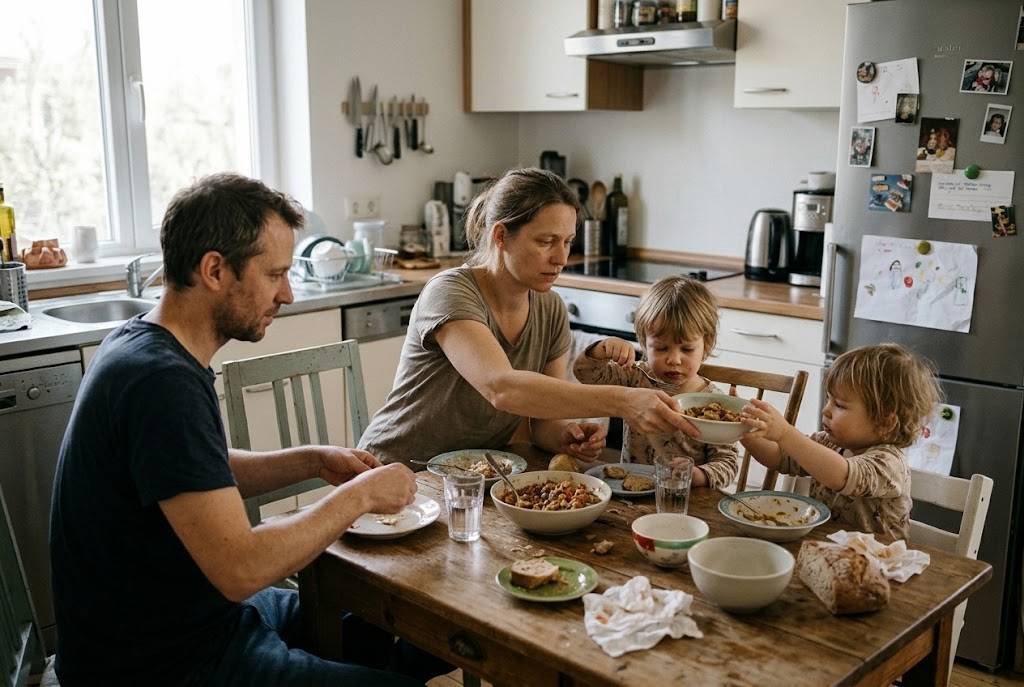
Much of family life depends upon repeated tasks. Meals need preparing, clothes need washing, rooms need tending, and children need help learning to take responsibility for what they use.
It is tempting to think of these activities only as work to be finished. Yet they also provide opportunities to learn how to live with others. A child who helps set the table learns that meals require preparation. One who helps clean up after a gathering sees that hospitality involves effort. A family that makes time to pray together gives faith a recognizable place in the day.
These habits will look different from one household to another. Some families can share breakfast; others gather in the evening. A parent working nights may need to protect a different hour for conversation or prayer. What matters is finding patterns that are possible to sustain and useful to the people who live there.
There is also room for delight. A favorite story read again, music while cooking, a birthday cake made together, or a walk after supper can become part of the family's memory. Such pleasures help make the home a place where people enjoy one another's company.
Beauty, Objects, and the Home
The things we keep around us also shape daily life. A table large enough to gather around, books within reach, a place to put coats, a picture that invites a child to ask a question: each can make some good activity easier.
Beauty need not be expensive. A clean room, flowers cut from the garden, a repaired chair, or a carefully laid table can express care for the people who will use them. A home with modest means can be warm and gracious. A beautifully furnished house can still feel difficult to inhabit if its inhabitants have no time for one another.
I would be reluctant to place another standard of perfection upon mothers in the name of a beautiful home. The work of caring for a household is already demanding, and the photographs we see online seldom show the full reality of family life.
The better question is whether our surroundings serve the people living within them. Can a child find a book? Can someone sit and talk? Is there room to welcome a friend? Do the objects we keep help us live as we hope to live?
The Particular Work of a Mother
Motherhood brings a particular closeness to the needs of another person. A mother learns to recognize a child's tiredness, delight, fears, and changing abilities. She is often the one who remembers what is needed for tomorrow and who notices when something is wrong today.
This knowledge is gained through attention and through years of shared life. It can become a source of steady authority: the authority of someone who knows, cares, guides, corrects, and remains present.
That authority is exercised imperfectly, as all human authority is. Mothers grow alongside their children. They need rest, friendship, spiritual support, and the practical help of others. Fathers share the essential work of forming children, and many other people contribute to a child's good.
Recognizing the importance of motherhood should never require us to diminish women whose lives have taken another course, or to treat paid employment and maternal care as competing measures of worth. A mother may work outside the home, work within it, or move between these arrangements as circumstances change. The responsibilities of love remain, even as the shape of the day differs.
What deserves recognition is the real labor of attending to persons: knowing them, teaching them, caring for them, and helping them grow.
Faith Learned at Home
For Catholic families, the home is also a place where children first encounter the practices of faith. They see someone make the Sign of the Cross, hear a prayer before meals, learn the names of saints, and gradually come to understand why Sunday Mass matters.
The Church speaks of the family as a domestic church. The phrase calls attention to the way Christian life is learned in the ordinary circumstances of a household. Children hear about forgiveness, and then they see what it means when someone asks pardon. They learn about charity, and then they watch how a family treats a lonely neighbor or an elderly relative.
These examples do not replace teaching, parish life, or the sacraments. They give children a chance to see that the faith professed on Sunday has something to say about the rest of the week.
There will be days when family prayer is interrupted, when patience fails, or when plans fall apart. The willingness to begin again is itself part of what children can learn from us.
What Goes Beyond the Front Door
Children grow, leave home, and take their own place in the world. They bring with them habits of speech, ways of handling conflict, memories of welcome or neglect, and ideas about what deserves their care.
None of us can predict exactly what they will carry forward. Children are persons with their own freedom, and the world will present them with influences and choices that parents cannot manage for them.
Still, the work of family life matters beyond the family. The person who learns to listen may become a considerate colleague. Someone who has been taught to keep promises may become a trustworthy friend. A child who has seen a parent care for an ill neighbor may be more ready to recognize the needs of another.
This is one way the culture of a home enters the wider community. It happens through people, through the habits they have learned and the choices they go on to make.
The Work Before Us
Motherhood can be exhausting, joyful, repetitive, surprising, and deeply demanding, sometimes all in the same day. There are long stretches when the work seems to consist almost entirely of meeting immediate needs. It is understandable to wonder whether anything lasting is taking shape.
I think it helps to remember that children are learning from the whole life of a household: from our care and our mistakes, from what we preserve, from the stories we tell, and from the way we return to one another after difficult moments.
We need not make every meal memorable or every room beautiful. We can begin with what is before us. Perhaps there is a conversation to give our full attention to, a family story worth telling, a habit that would bring greater peace, or a child who needs a little more of our time.
These are ordinary choices. Over years, they help make a home in which people learn how to live with one another.
And that, I think, is one of the most important ways a mother helps shape the world.